
Introduction
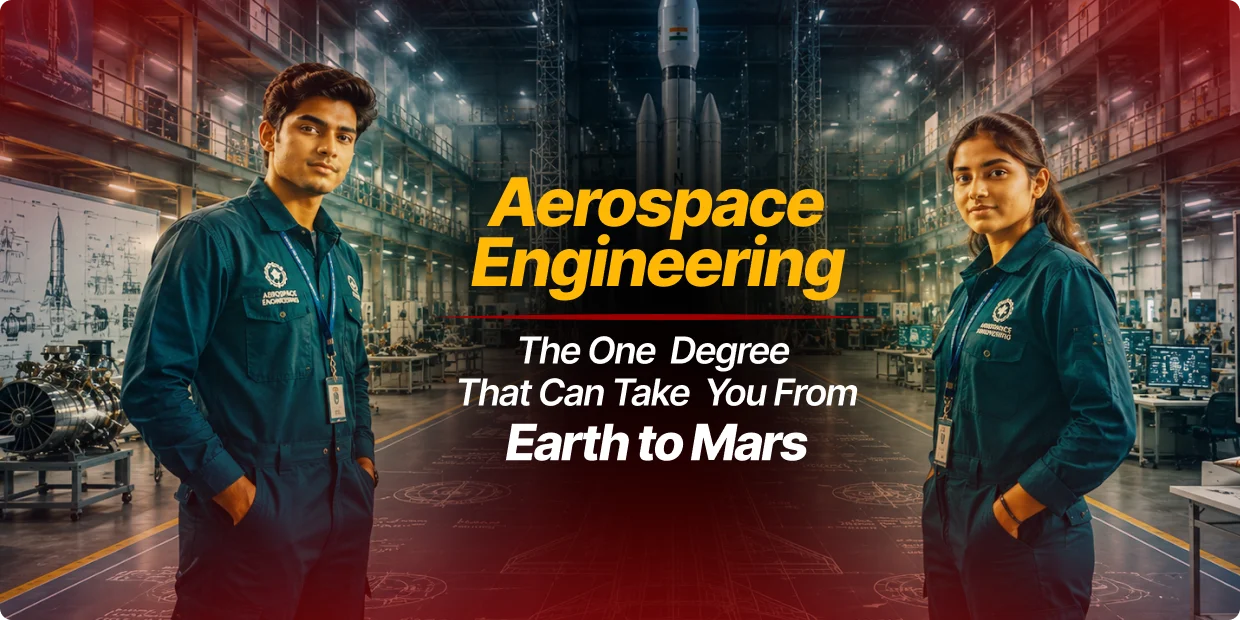
Aerospace engineering is the pinnacle of engineering ambition, encompassing the design, development, and production of both aircraft and spacecraft. Unlike aeronautical engineering, which focuses exclusively on atmospheric flight, aerospace engineering extends its reach to the cosmos, covering rockets, satellites, space stations, and interplanetary vehicles. , as humanity pushes deeper into space with commercial lunar missions, Mars exploration plans, and proliferating satellite constellations, aerospace engineering stands as one of the most dynamic and consequential fields of study.
From propelling astronauts beyond low Earth orbit to designing communication satellites that connect billions and developing hypersonic defense systems, aerospace engineers are solving some of the most complex challenges of our time. This article provides an exhaustive overview of what it takes to succeed in aerospace engineering today.
What Is Aerospace Engineering?
Aerospace engineering is broadly divided into two branches: aeronautics, dealing with aircraft within the atmosphere, and astronautics, dealing with spacecraft beyond the atmosphere. The discipline draws upon aerodynamics, thermodynamics, structural analysis, propulsion, orbital mechanics, materials science, and control systems.
Students study how vehicles interact with their environments, whether that is the dense lower atmosphere, the thin upper atmosphere, or the vacuum of space. They learn to design systems that can withstand extreme conditions, from the intense heat of atmospheric reentry to the radiation-heavy environment of deep space.
Educational Pathway and Top Colleges
A career in aerospace engineering begins with a B.Tech or B.E. degree, typically pursued after qualifying entrance exams like JEE Main and JEE Advanced. In India, leading institutions include IIT Bombay, IIT Kharagpur, IIST Thiruvananthapuram, and Manipal Institute of Technology. Internationally, Caltech, MIT, University of Michigan, and ETH Zurich are among the best.
Many aerospace engineers further specialize through M.Tech or MS programs in propulsion, satellite systems, space robotics, or computational mechanics. PhD programs are popular among those aiming for research careers at space agencies or academic institutions.
Career Opportunities and Job Roles
Aerospace engineers find employment across government space agencies, defense organizations, and private space companies. In India, ISRO, DRDO, HAL, and NAL (National Aerospace Laboratories) are prominent employers. Globally, NASA, ESA, SpaceX, Blue Origin, Northrop Grumman, and Raytheon offer exceptional career opportunities.
The new space economy has created a wave of startups focused on small satellite launches (Rocket Lab, Astra), in-orbit servicing, space debris removal, and space tourism. Job roles range from propulsion engineer and orbital mechanics analyst to mission systems engineer, satellite integration specialist, and thermal analyst.
Salary Trends and Growth Potential
Entry-level aerospace engineers in India earn between INR 5 to 10 lakhs annually, while those at ISRO or private space startups may earn more. With experience, salaries rise to INR 15 to 30 lakhs. In the United States, median salaries hover around USD 95,000 to 130,000, with senior engineers at companies like SpaceX or Boeing earning well above USD 160,000.
The sector’s growth is closely tied to government space budgets and private investment, both of which have been increasing steadily worldwide.
Emerging Trends and Future Scope
The aerospace industry is witnessing a golden era of innovation. Reusable rocket technology, pioneered by SpaceX, has dramatically reduced launch costs and opened space access to smaller organizations. Satellite mega-constellations for global internet coverage (Starlink, OneWeb, Amazon Kuiper) are creating massive demand for satellite engineers.
Hypersonic technology, space-based solar power, in-situ resource utilization on the Moon and Mars, and advanced life support systems for long-duration missions are all active research areas. AI-driven autonomous spacecraft navigation, 3D printing of rocket components, and green propulsion systems using non-toxic fuels represent the next wave of aerospace innovation.
Conclusion
Aerospace engineering is not merely a career; it is a calling for those fascinated by the cosmos and driven to extend humanity’s reach beyond Earth. With unprecedented investment flowing into both government and commercial space programs, the coming decades promise extraordinary opportunities for aerospace engineers. If the idea of designing vehicles that traverse the final frontier excites you, there has never been a better time to pursue aerospace engineering.
